
Aging Alone: Challenges and Solutions for Solo Agers in 2026
Inspired by U.S. News & World Report's recent feature on solo aging, with the practical, plain-English angle TechMaid families actually need.

TL;DR
Roughly 1 in 4 older Americans is a solo ager: living without a partner or close relatives. Aging alone safely is absolutely possible, but it does not happen by accident. The six pressure points are mobility, transportation, cognition, social isolation, safety, and household management. The fix is a mix of home modifications, community resources, professional caregivers, and smart tech, all set up before you actually need them. TechMaid handles the tech side: unlimited chat plus a 24-hour person callback for $4.99 a month.
In This Article
Jump to any section below.
What Solo Aging Really Means
Solo aging is not just being single. It is aging without the built-in support most people assume will be there.
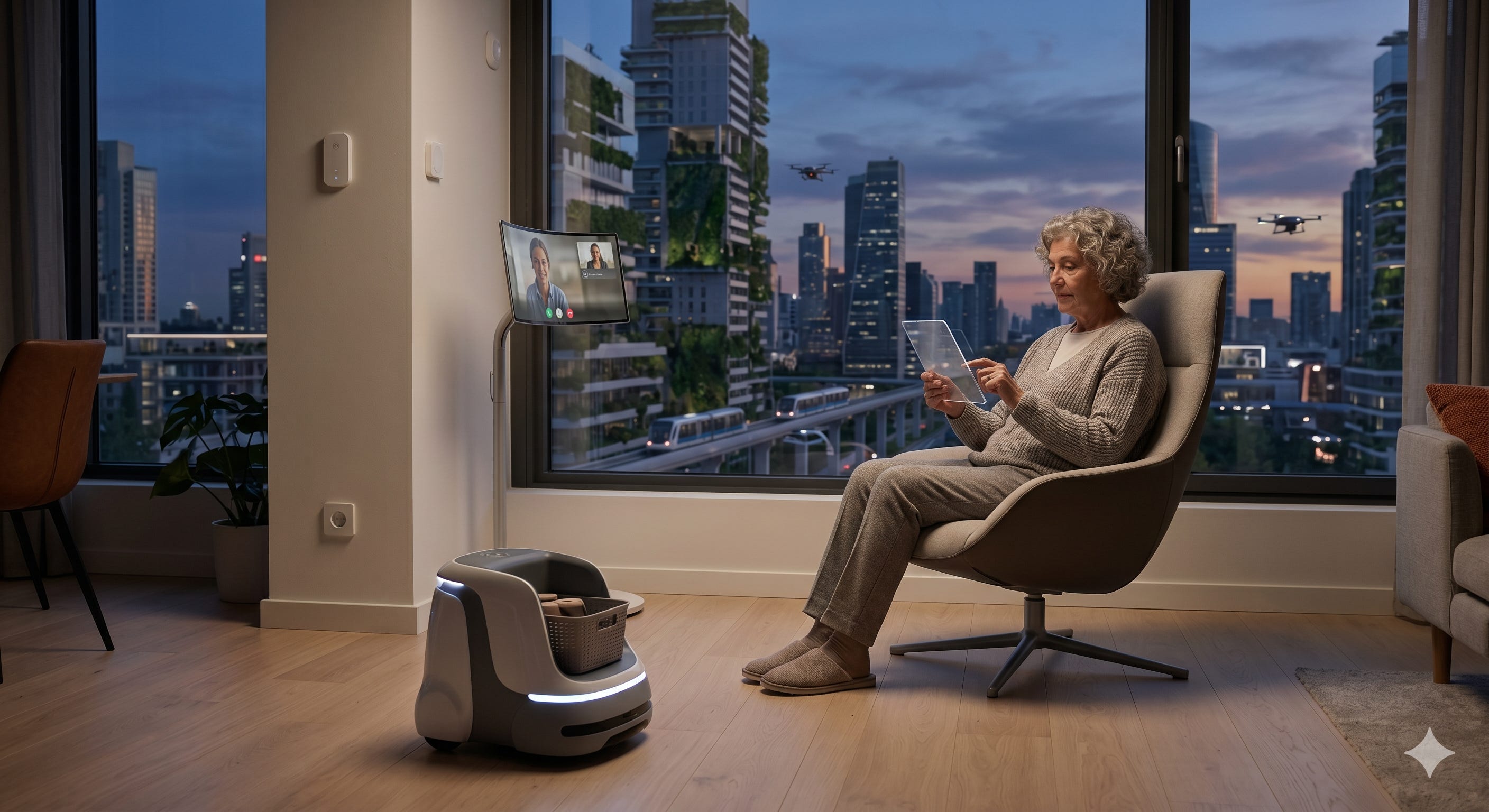
A working definition
A solo ager is an older adult, typically 60+, who lives alone and does not have a spouse, partner, or adult children nearby to step in during a crisis.
How common is it
About 27% of Americans 60 and older live alone, and roughly 1 in 6 has no children. The fastest-growing senior demographic in the country is the solo ager.
Why it matters now
Most seniors say they want to stay in their own home as long as possible. Doing that alone, safely, requires a plan written before a fall, a diagnosis, or a license suspension forces the issue.
The 6 Core Challenges of Aging Alone
Every solo ager hits some version of these six. The good news: each one has a known solution.
Mobility and Falls
Falls are the leading cause of injury for adults over 65. Living alone means no one is in the next room when it happens.
Transportation
When driving stops being safe, getting to a doctor, pharmacy, or grocery store becomes a daily logistics problem.
Cognitive Changes
Memory shifts are easier to hide when no one lives with you. That makes early detection and planning even more important.
Social Isolation
Solo agers report loneliness at nearly twice the rate of partnered seniors. Loneliness is now treated as a real health risk.
Safety and Scams
Scammers specifically target seniors who live alone. There is no spouse to glance over and say, ‘that does not sound right.’
Household Management
Bills, repairs, medication refills, insurance forms. The whole load lands on one person with no built-in backup.
Home Modifications for Safety
Most senior injuries happen in the bathroom and on stairs. A few hundred dollars of changes prevent the majority of them.
Bathroom upgrades
Grab bars next to the toilet and inside the shower, a non-slip mat, a shower seat, and a handheld showerhead. Walk-in showers when budget allows.
Lighting and trip hazards
Motion-activated nightlights in hallways and bathrooms, brighter bulbs on stairs, and removing every throw rug. Throw rugs are the single biggest indoor fall risk.
Reach and grip
Lever-style door handles instead of knobs, pull-out kitchen shelves, and a reacher-grabber tool. Small changes that protect joints and prevent ladder use.
Aging-in-place specialists
A Certified Aging in Place Specialist (CAPS) can walk through the home and identify risks. Many Area Agencies on Aging will fund the assessment.
Transportation Solutions
The day driving stops is the day independence usually takes the biggest hit. Plan for it before it happens.
Senior ride programs
Most counties run free or low-cost ride services for medical appointments and grocery trips, usually through the Area Agency on Aging.
Rideshare without a smartphone
Services like GoGoGrandparent let you call a phone number and get an Uber or Lyft. No app, no smartphone required. TechMaid can set up the account.
Paratransit and ADA services
Door-to-door service for seniors and people with disabilities, run by local transit authorities. Usually $2 to $5 per ride.
Grocery and pharmacy delivery
Instacart, Amazon Fresh, and most major pharmacy chains deliver. The trip you do not have to take is the safest one.
Staying Socially Connected
The Surgeon General has called loneliness an epidemic. For solo agers, connection is not a nice-to-have. It is medical.
Senior centers and community programs
Most towns have a senior center with classes, meals, and trips. Free or low-cost, and built specifically for showing up alone.
Faith communities and volunteer roles
A standing weekly commitment is the strongest predictor of staying connected. Choirs, volunteer driving, food pantries, library reading programs.
Video calling with family
FaceTime, Zoom, or WhatsApp on a tablet, set up with one-tap shortcuts. A 10-minute call with a grandchild beats most antidepressants.
Build a “phone tree”
Three to five people who agree to check in on you weekly, on a rotation. Solo agers who set this up are dramatically less likely to go undiscovered after a fall.
Smart Technology That Helps
You do not need a smart house. You need three or four devices that earn their keep every single day.
Fall detection and medical alerts
An Apple Watch, a Bay Alarm Medical pendant, or a Lively Mobile button. All call for help automatically if a fall is detected and you do not respond.
Voice assistants
Amazon Alexa or Google Home can call family hands-free, set medication reminders, and turn lights on without getting up. Game-changer for arthritis and balance.
Smart pill dispensers
Devices like Hero or MedMinder beep, light up, and text a family member if a dose is missed. Medication mistakes send more seniors to the ER than almost anything else.
Telehealth
Video doctor visits from the couch, no driving, no waiting room. Most insurance now covers them at the same rate as in-person.
Smart locks and video doorbells
See who is at the door without getting up, and let in a trusted neighbor remotely. Big peace-of-mind win for solo agers.
Planning Ahead and Local Resources
The hardest part of solo aging is the paperwork nobody wants to do. Do it now, while you are still the one in charge.
Legal documents to put in place
A durable power of attorney, a healthcare proxy, an advance directive, and an updated will. Without these, a court picks who decides for you.
Geriatric care managers
Licensed professionals who build and run a care plan. Often described as “a paid adult child.” Especially valuable for solo agers with no nearby family.
Area Agency on Aging
Every U.S. county has one. Free help with rides, meals, in-home care, benefits enrollment, and home modifications. Search “[your county] Area Agency on Aging.”
When to consider senior living
Independent living, assisted living, and Continuing Care Retirement Communities (CCRCs) all exist for the day staying home stops being safe. Tour 2 or 3 before you need them, not after.
Where TechMaid Fits In
You can buy every device on this page. The hard part is setting them up, keeping them working, and having someone to call when they stop.
Setup, in plain English
TechMaid walks solo agers through pairing a smartwatch, connecting Alexa, installing a video doorbell, or starting a telehealth visit. No jargon.
Unlimited chat plus 24-hour person callback
Members get unlimited chat assistance and can request a callback from a real person within 24 hours. $4.99 a month or $49.99 a year.
Scam protection built in
Solo agers are scammers’ favorite target. Before you click, call, or wire anything, you can ask TechMaid first.
Frequently Asked Questions
Common questions solo agers and their families ask.
What is a solo ager?
A solo ager is an older adult who lives without a spouse, partner, or close adult relatives nearby. About 1 in 4 Americans 65+ fits this description.
Can you safely age in place if you live alone?
Yes, with planning. Combine home modifications, fall detection, telehealth, transportation services, and a check-in network of friends or neighbors.
What home modifications matter most?
Grab bars, better lighting, no throw rugs, a walk-in shower, and lever-style door handles. These five changes prevent the majority of in-home senior injuries.
How do solo agers handle transportation?
Senior ride programs, GoGoGrandparent (Uber/Lyft by phone), paratransit, and grocery and pharmacy delivery. TechMaid helps set up and use the apps.
Do I need a geriatric care manager?
If you do not have nearby family, often yes. They function as a paid adult child, coordinating doctors, services, and emergencies on your behalf.
How does TechMaid help seniors who live alone?
TechMaid sets up smart home devices, video calling, telehealth, fall detection, and ride apps. Unlimited chat plus a 24-hour person callback for $4.99 a month.
Related Articles
More on senior independence, health, and safety.
Age Tech at Home: Aging in Place in 2026
Wearables, AI companions, telehealth, and smart homes for seniors.
Building a Senior-Friendly Smart Home
Lights, locks, thermostats, and voice control done the simple way.
How Tech Is Quietly Changing Senior Health
AI monitors, wearables, telehealth, and smart homes in 2026.
Join Our Community: